How life is built
Learn
From single molecules to whole cells: what living things are made of, where everything sits, and how big it all really is.
01
The building blocks
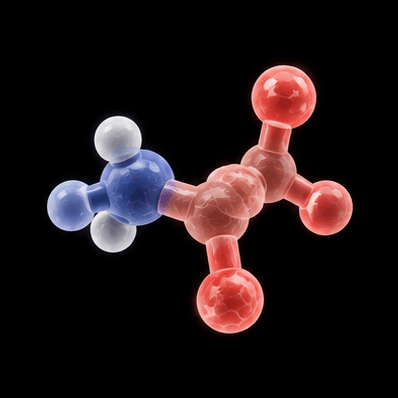
Water makes up most of a cell's mass. Most of the rest, its dry mass, is four families of large molecules, most of them built by linking many small units together.1
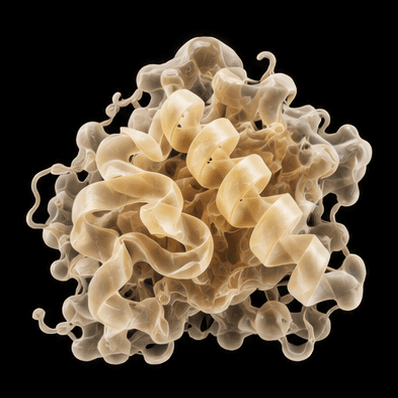
Proteins
Chains of amino acids that fold into specific 3D shapes. The shape decides the job: speeding up reactions, carrying substances, building structures, sending signals.
Built from Amino acids. Proteins use 20 common kinds.2
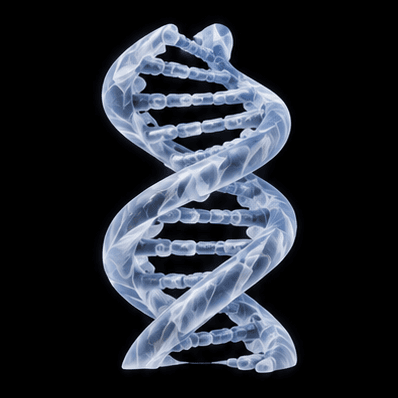
Nucleic acids
DNA is the genetic material of every living thing. RNA is mainly involved in making proteins, under DNA's direction; one kind, messenger RNA, carries DNA's message.
Built from Nucleotides: A, C, G and T in DNA. RNA has U instead of T.3
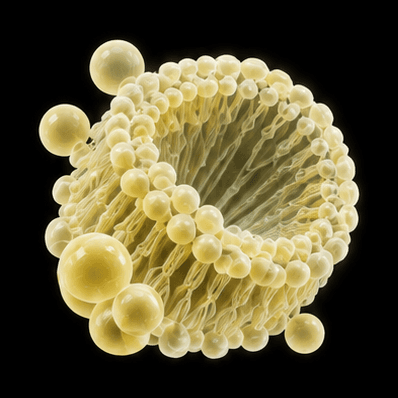
Lipids
Fats, oils and related molecules that are mostly nonpolar, so they don't dissolve in water. Phospholipids have a water-loving part and a water-avoiding part; lined up in a double layer, they are the main component of every cell membrane.
Built from Fats are made of glycerol and fatty acids. Steroids such as cholesterol are lipids too.4
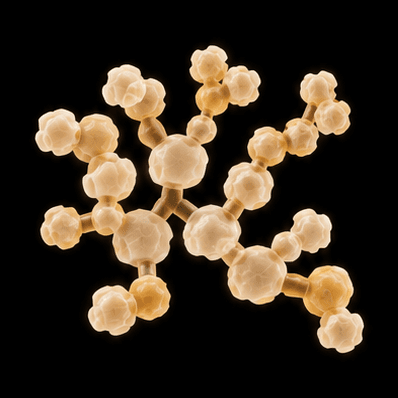
Carbohydrates
Energy and structure. Plants store sugar as starch, humans and other vertebrates store glucose as glycogen, and plant cell walls are made mostly of cellulose.
Built from Simple sugars, most commonly glucose.5
02
Inside the cell
Plant and animal cells are packed with specialised parts called organelles. They keep different jobs in different compartments of the cell.6
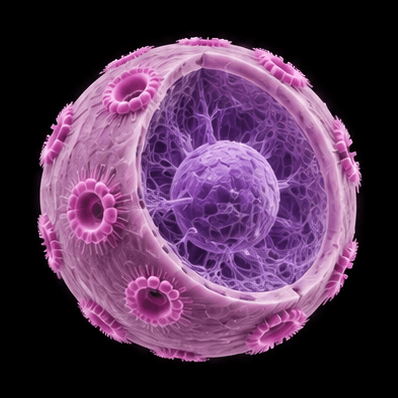
Houses the cell's DNA inside a double membrane called the nuclear envelope, and directs the making of ribosomes and proteins.6
03
Kinds of cells
Every living thing is made of one or more cells, and the cell is the basic unit of life.9 Cells come in very different shapes and sizes.
Prokaryote
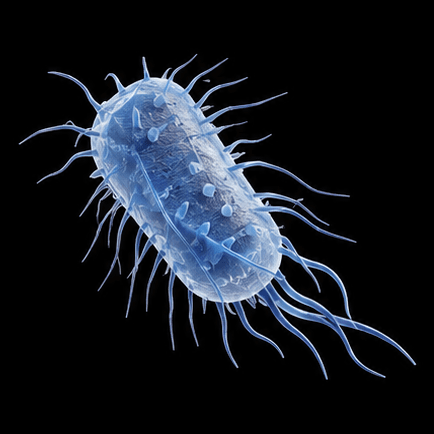
Bacterium
A single cell with no nucleus; its DNA sits in a central region called the nucleoid. E. coli is about 2 µm long and 1 µm wide.8,10
Eukaryote
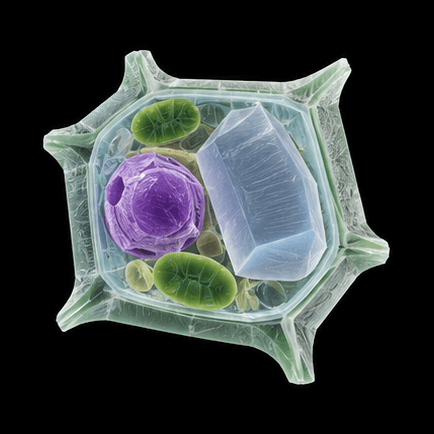
Plant cell
Surrounded by a rigid wall made mostly of cellulose. Chloroplasts carry out photosynthesis, and a large central vacuole takes up most of the cell's volume.6,5
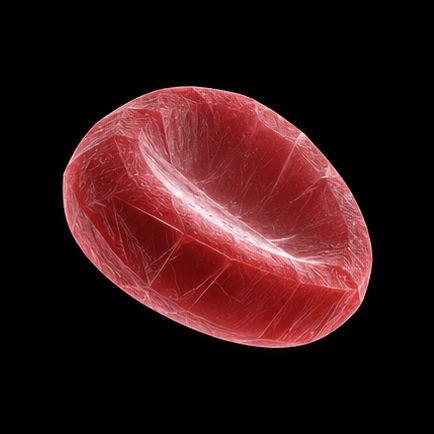
Human
Red blood cell
A flexible disc about 7 to 8 µm across, thin in the middle, full of hemoglobin that carries oxygen from the lungs to the tissues. A mature one has lost its nucleus and most other organelles.11
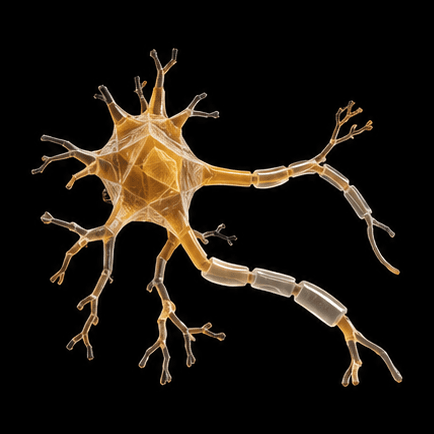
Human
Neuron
Carries the electrical signals behind sensation, movement and thought. Its axon can be very long: the one that moves the big toe may be a metre long.12,13
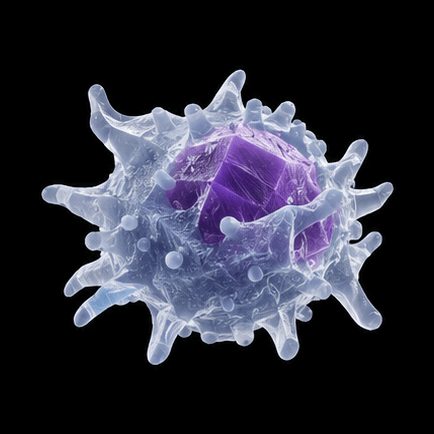
Human immune cell
Macrophage
A monocyte that has left the blood. It engulfs debris, pathogens, worn-out red blood cells and other dead or damaged cells, a process called phagocytosis.14
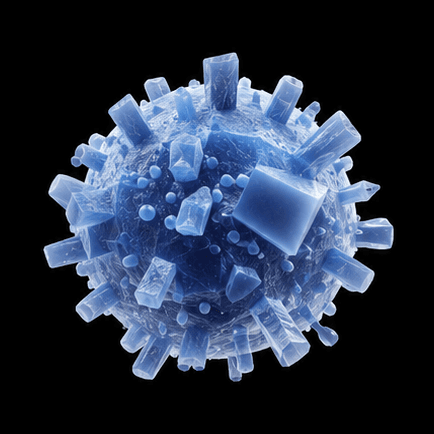
Human immune cell
T cell
Gives immunity at the level of cells, by attacking foreign or diseased cells directly.14
04
Size and scale
With few exceptions, cells are too small to see without a microscope.9 Switch cells on and off to compare them, all drawn to the same scale.
References
Always check important information with the original sources.
- 1OpenStax Biology 2e, 3.1 Synthesis of Biological Macromolecules (opens in a new tab)
- 2OpenStax Biology 2e, 3.4 Proteins (opens in a new tab)
- 3OpenStax Biology 2e, 3.5 Nucleic Acids (opens in a new tab)
- 4OpenStax Biology 2e, 3.3 Lipids (opens in a new tab)
- 5OpenStax Biology 2e, 3.2 Carbohydrates (opens in a new tab)
- 6OpenStax Biology 2e, 4.3 Eukaryotic Cells (opens in a new tab)
- 7OpenStax Biology 2e, 4.4 The Endomembrane System and Proteins (opens in a new tab)
- 8OpenStax Biology 2e, 4.2 Prokaryotic Cells (opens in a new tab)
- 9OpenStax Biology 2e, 4.1 Studying Cells (opens in a new tab)
- 10Milo & Phillips Cell Biology by the Numbers: How big is an E. coli cell and what is its mass? (opens in a new tab)
- 11OpenStax Anatomy and Physiology 2e, 18.3 Erythrocytes (opens in a new tab)
- 12OpenStax Anatomy and Physiology 2e, 12.2 Nervous Tissue (opens in a new tab)
- 13OpenStax Anatomy and Physiology 2e, 13.2 The Central Nervous System (opens in a new tab)
- 14OpenStax Anatomy and Physiology 2e, 18.4 Leukocytes and Platelets (opens in a new tab)
- 15J. Assist. Reprod. Genet., 2022 Pors SE et al. Oocyte diameter predicts the maturation rate of human immature oocytes collected ex vivo (opens in a new tab)
- 16Biol. Proced. Online, 2009 Erickson HP. Size and shape of protein molecules at the nanometer level determined by sedimentation, gel filtration, and electron microscopy (opens in a new tab)